Showing posts with label Issues. Show all posts

Friday, May 20, 2011

Series: A Critique of Common Justifications for Alberta's Oil Sands

[This post is the fourth in a 5 part series, which looks at the main economic, social, and environmental justifications for Alberta's Oil Sands. The final post in this series will discuss select renewable energy sources, along with the feasibility of implementation in Alberta. Click for Justification 3, Justification 2 and Justification 1]

Argument 4 - Most Stringent Regulations in the World

“Canada’s oil sands industry operates within some of the most stringent and comprehensive regulations for resource development anywhere in the world” (OSDG)

Unfortunately, although many hours and expenditures are going into drafting these complex socio-economic and environmental regulations, the laws are simply not being monitored. World class policies remain on paper, while the realities of the industry are not accounted for. The Royal Society of Canada explains that “the environmental regulatory capacity of the Alberta and Canadian Governments does not appear to have kept pace with the rapid growth of the oil sands industry over the past decade.”

There is also a clear lack of transparency in the industry; although oil is being extracted on public lands, private property leases have been administered. Public ground access is prohibited, and minimum flight elevation rules hinder any useful observations. In addition, there is a “paucity of relevant data available to the public due in large part to a decline in government monitoring in recent decades that have coincided with rapid and major expansion of the [oil sands] industry.” (Timoney and Lee)

Monday, May 2, 2011

Series: A Critique of Common Justifications for Alberta's Oil Sands

[This post is the third in a 5 part series, which looks at the main economic, social, and environmental justifications for Alberta's Oil Sands. The final post in this series will discuss select renewable energy sources, along with the feasibility of implementation in Alberta. Click for Justification 2 and Justification 1]

Argument 3 - Reinvesting in New Technologies to Extract the Rest of the Oil Sands

Current techniques make a large portion of the oil sands unavailable to us. While investing only a small portion of funding into renewable and sustainable technology, Alberta and the oil companies are investing in new technology to extract the rest of Alberta’s oil sands. The logic behind this decision is that “Alberta's conventional oil and gas supplies are declining rapidly” (Alberta Innovates) Industry admits that oil is a finite resource. The thing is, by definition, a finite resource will in every single instance reach a point where it dwindles and runs out. Therefore, even if newer technologies are made available, humanity will yet again find itself at this very same point of exhaustion. However next time, there will be no more oil, or, what remains will not make economic sense to extract. By this time, the rest of the world’s reserves will have likely run out, and as the only alternative, the world will have switched to powering their economies by use of sustainable technology, making oil the least desirable option.

This is what miles of undisturbed boreal forest now looks like thanks to the oil sands operations. Via Flickr - mrjorgen
There are many examples of countries and states already moving away from non-renewable energy sources. By 2007, Denmark had managed to source 19.7% of their electricity from wind power alone. This was a 16.4% increase in only 16 years. Even other nations who are oil rich are planning ways to reduce their dependency on oil. The UAE, a federation with the most oil per hectare than anywhere else in the world, is structuring their economy to be less dependent on oil money. An unstable oil market and eventual exhaustion are reasons cited for this, conditions that apply to oil extraction projects everywhere. Saudi Arabia is also moving away from oil for the same reasons. Although the alternatives that these nations choose are often unsustainable as well (ex. energy consuming skyscrapers, nuclear power), it does show a global consensus that oil is clearly not the energy of the future.

Alberta Innovates has directly stated that the priorities of the Energy and Environmental research are focused on the next twenty-years. Such short-term thinking is highly illogical when we fully expect multiple generations to come after ours. It would be much wiser to invest in renewable technologies, which are constantly improving and becoming more affordable, both for long-term business strategy and economic, social and environmental health.

Wednesday, April 6, 2011

Series: A Critique of Common Justifications for Alberta's Oil Sands

[This post is the second in a 5 part series, which looks at the main economic, social, and environmental justifications for Alberta's Oil Sands. The final post in this series will discuss select renewable energy sources, along with the feasibility of implementation in Alberta. Click for Justification 1]

Argument 2: Reclamation - Full Restoration of Land that Oil Sands Projects Disturb

Current regulations mean that “developers are required to restore oil sands mining sites to at least the equivalent of their previous biological productivity, which means the region as a whole forms an ecosystem landscape at least as healthy and productive as that which existed before development”. (Alberta Innovates)

Suncor recently reclaimed 220 hectares of land, however wildlife is sparse and full reclamation is known to be many decades away. The idea that full reclamation even exists is still hotly debated; David Suzuki has said there is little to no chance of reclamation. The First Nations people who are affected agree. "We don't know if it will support life or what chemicals are still soaked into the soil, and at the end of the day this land will be a fundamentally different landscape than the diverse ecosystem that was here before Suncor began its destructive operations," stated George Poltras, former Chief of Mikisew First Nation, who live downstream of the oil sands.


Furthermore, the environmental impacts go much further than just the direct area that the oil sands projects disturb. The operations pollute in 11 major ways (Timoney and Lee 2009), including:
  • Permitted (licensed) discharges to air and land
  • Seepage from tailings ponds
  • Evaporation from tailings ponds
  • Leaks from pipelines
  • Major spills of bitumen, oil, and wastewater
  • Tar sands dust
  • Ancillary activities such as transporting, construction of mines, ponds, roads, pipelines, facilities, and dewatering practices
Because of this activity, watersheds in the area suffer greatly. An independent peer-reviewed scientific study has shown that the oil sands are in fact poisoning the Athabasca river.

In addition, capital collected for reclamation security funding for just the direct area affected is overwhelming inadequate. Pembina has projected that the security contains enough funding to provide each hectare of land with $11 964. Reclamation activities will, based on current data, cost upwards of $220 000 per hectare. The balance of the funding could end up in the hands of Albertan taxpayers, each resident could be liable for $4300 to $6300. The Royal Society found that “current practices for obtaining financial security for reclamation liability leave Albertans vulnerable to major financial risks.”

Click here for more information. And please comment below if you have questions, comments of ideas.

Tuesday, April 5, 2011

Series: A Critique of Common Justifications for Alberta's Oil Sands

[This post is the first of a 5 part series, which looks at the main economic, social, and environmental justifications for Alberta's Oil Sands. The final post in the series will discuss select renewable energy sources, along with the feasibility of implementation in Alberta]

Humanities addiction to oil has become a global crisis, as energy needs continue to skyrocket. Because of this, Alberta’s oil sands are being touted as a ‘bright light’ for the province. Although industry and government alike have been criticized for ignoring the true costs of the operation, they continue to maintain that the oil sands are an economic necessity. This series will look at the main economic, social and environmental justifications for the oil sands, and present alternative views.

Argument 1: The Oil Sands Provide a Stable and Growing Economy for Alberta and Canada

Industry touts that there are currently 456 000 direct and indirect jobs created by the oil sands, while more are being created every day. (OSDG, an industry funded association)

The figure implies that in the:
  • Short-term: Alberta’s economy will no doubt enjoy the economic benefits that oil is providing, in the form of jobs and injected capital. 
  • Long-term: The number of jobs that rely on the presence of oil will become detrimental to the economy. Guaranteed oil exhaustion will put hundreds of thousands of well paying jobs into peril. This is only natural, as structuring an entire economy around a finite resource only invites an eventual collapse in the system.

The global economy will be severely affected by the projected energy crisis. As we saw in 2008, globalization means all countries are deeply linked to the economic health of the global network.

“As demand grows in the next decade, we will not have the oil production capacity we will need to meet demand. Supply will then have to ration demand, and prices will skyrocket – with the likely outcome of bringing the world’s economy to its knees.” explains John Hess, chairman of Hess, a large, international energy company based in the United States.

Furthermore, Alberta's tourism industry has been targeted because of the oil sands. In 2010, Corporate Ethics International launched a billboard campaign that encouraged Americans to rethink visiting the province, which would block valuable tourism dollars from multiplying through Alberta’s economy. The message of the campaign was simple, Michael Marx of CEI stated that he wanted “Alberta and Canada to quit interfering in our efforts in the United States to end our addiction to oil and transition to a clean energy economy.”

Even Barack Obama maintains that renewable energy sources will be the economic power house of the future; he claimed that "the country that figures out how to make cheaper energy that's also clean, that country is going to win the economic competition of the future.”

Please comment below if you have questions, comments or ideas.

Friday, April 1, 2011

Great Bear Rainforest threatened by Northern Gateway Pipeline Proposal

You may have heard about the Northern Gateway Pipeline in recent news, but sometimes it's hard to know the full scope of what's going on if you only get tidbits. Here's a brief synopsis of what Enbridge is planning and what's at stake.

The pipeline would be a $5.5 billion dollar project that would see 525 000 L of oil  per day taken from Alberta to the northern coastline of British Columbia. The proposal would cross over 1000 lakes, streams and other waterways before coming to a halt in the Great Bear Rainforest. Then around 200 tankers would come to the region to transport oil to Asia or California.

Enbridge has applied for permission to the federal government to go ahead with this venture, but first it has to go by a panel of experts who will look it over.

Pembina, a reputable policy research group that focuses on climate change and energy, doesn't agree with the project [and for more than just environmental reasons]. They say, among other things, that Enbridge is missing crucial pieces in their application (like that there are no long-term contracts from shippers).

Part of what is at stake
Source
Anyway, in plain language, Enbridge says that they wouldn't have proposed the project if they didn't believe they could do it without damaging the environment. They're going to do a lot of new things, and there are different regulations in place this time, etc.

Once again, these energy officials are citing policy, not reality.

And the reality is that from 1999 - 2009 Enbridge was responsible for 713 oil spills. (Polaris Institute) You might remember one of their more recent screw-ups: the Kalamazoo oil spill back in July 2010, when over 800 000 gallons of oil made their way into the river.

The Great Bear Rainforest
Source
This issue is no doubt super controversial; it has received more comments than any other project of its kind in federal history.

For more information, or to take action go to savethegreatbear.org.

Friday, March 25, 2011

Zainab's Story - Realities from Pakistan

Pakistan is no doubt a country riddled with troubles, from the flooding that affected 22 million of their citizens last year, to the ongoing Taliban presence. Honour killings are still common in the country, as is rape and domestic abuse.

Many people know about these issues, however it is rare to hear first-hand accounts of the hardships of living in Pakistan. And so I introduce you to Zainab, a beautiful young Pakistani woman who completely embodies the notion of courage. She survived two acid attacks, and I highly recommend watching her story below, for a dose of both reality and inspiration.


If you're interested in hearing more about Pakistan and it's people, I would highly recommend checking out gawaahi.com, which presents "stories of abuse and survival, the testimonies of the survivors of the worst floods in Pakistan’s history, and the narratives of Pakistanis celebrating their individual identities".

Tuesday, March 15, 2011

Factory Farms Want to Make Helping Animals Illegal

I have started this post out with about 5 different sentences and deleted them all. Why? Because I'm so frustrated with the topic I want to introduce and am trying to frame this situation so that everyone will see how utterly ridiculous it is.

What is getting me so worked up?

That Iowa wants to pass a law which states that "undercover investigators who take agricultural jobs to gain access to animals and record their mistreatment, will face penalties, up to a $7500 fine, and five years in prison."

This is in the wake of animal-rights activists gaining employment at a factory farm, and filming horrific abuses, such as:
  • Cows on their knees being shocked and beaten 
  • Pigs hit and dragged across the floor
  • Chicks ground up alive or left to suffocate in a disposal bin.

Via Farm Sactuary

Basically, the agricultural industry, in plain language, is saying "if you try to protect the animals we are abusing and exploiting, we will put you in jail".

Ok, since when did "recording mistreatment" for those who don't have a voice become illegal? Would these same lawmakers have a problem if I were to record and publicize the mistreatment of child slaves in Bangladesh? Probably not. Actually, I would probably receive a pat on the back if I fought for those who couldn't fight for themselves.

So what makes this any different?

Maybe the fact that the agricultural industry is responsible for $24.7 billion in sales. Yet again, money trumps morals, but is that really the kind of society we want to live in?

You decide.

We may not all be high powered lawyers, but we can still contribute positively to this issue.
I offer the same advice I did for stopping dead zones: (weird how everything is connected, isn't it!)

Buy local and organic, and eat less meat.

{Update: The bill was passed Thursday morning. } 

Sunday, March 13, 2011

Animal Testing at the University of Texas

Last month, I posted about animal testing and the despicable practices the industry employs. This month, the University of Texas has shown itself to be a part of that inhumane industry.

A whistleblower recently called PETA to share some rather disturbing methods the University of Texas Medical Branch at Galveston (UTMB) has been using. The insider reported that dogs, cats, monkeys, sheep, goats, ferrets and mice are all being used in painful experiments. These animals have been burned, mutilated, and cut open, while at the same time are surrounded by untrained staff, careless handling and severe neglect.

Experimenter Daniel Traber has allegedly subjected these animals to third degree burns on 40% of their bodies, while forcing them to inhale smoke.

"Scientists" and experimenters also intentionally:
  • Caused spinal cord injuries in sheep.
  • Operated painful surgical procedures on animals and offered no anesthetic either during or after the surgery.
  • Imprisoned highly social animals to tiny stainless steel cages.
And more!

Click here for more information, and to send a letter to the UTMB President urging him to take action.

Tuesday, March 8, 2011

Dead Zones - Oceanic Graveyards

WHAT are they?

Dead zones are areas in the ocean that can no longer support life- life that once flourished there. To put it bluntly - virtually everything in that area of the ocean is dead or has fled. (Little rhymes amid research are always fun)

A 2008 study counted 405 dead zones in the world. (A 2004 report counted only 150) Many are still small, but will undoubtably increase in size unless something is done.

One of the most concerning dead zones is in the Gulf of Mexico. It is over 22 000 square kilometers - the size of New Jersey. A main cause of this particular dead zone is the massive amount of agriculture that exists in the midwest, near the Mississippi river.

This satellite image shows the dead zone in the Gulf of Mexico, as well as two in Asia
Source
WHY does it happen?

Dead zones are oxygen depleted areas in the ocean that can no longer support the marine life that usually lives there. The water there can also be toxic to animal and human swimmers.

What's to blame?

  • Human Activity, especially the agricultural industry. Excess chemicals like nitrogen and phosphorous that runoff from sewage, cars, factories and industrial farming operations either dumping or letting their waste seep into the water.
  • Chemical fertilizers are considered to be the main cause of dead zones. There is simply too much toxic runoff for natural filters, like soil, to purify. Once the chemicals enter the water untreated, they eventually run into the ocean and cause an algal bloom; the bloom causes the oxygen-deprived dead zones. Plants and animals that are not able to escape usually die in the toxic environment, those that can flee go elsewhere.

Can this CHANGE?

Dead zones are reversible when the pesticides, manure, and other toxic chemicals that caused them are greatly reduced or eliminated. We just have to DO something about it! The Black Sea dead zone, which was once the largest dead zone in the world, mostly disappeared between 1991 and 2001 when fertilizers became too costly for farmers to use.

Moral of the story: Stop using pesticides, stop supporting the agricultural industry - go organic and local, eat less meat.

Thursday, March 3, 2011

Too Late for the Planet?

I get comments from people all the time that basically imply that any education/activism Im doing is fruitless as it is too late. Too late for the planet, too late for our society, and too late in inspiring action.

Although I admit no one really knows what the impacts of our actions will be in the future (even those scientists that tell you they do - they're making educated guesses), I am convinced that we should at the very least try.

Let's put it this way - you put a scrumptious pizza outside to cool down. You get distracted and end up leaving it out there for an hour. Do you sit inside eating rice crackers because you figure it's too late (an animal might have eaten it) or do you take the initiative to go outside and check?

Personally I would check on my pizza, rice crackers are not that tasty. It sucks that I got distracted but maybe I can still enjoy that cheesy, veggie, doughy goodness. (Pizza = planet, I love metaphors, what can I say)

Much Love!

Tuesday, March 1, 2011

Fun Facts about Food

  • Americans waste 40 PERCENT of the food they produce for consumption; this amounts to a cost of over $100 billion a year. - Picture 40% of your grocery store being dumped into the garbage. Daily.
  • The average grocery store item travels 2400 kilometers to get to your plate. Or your garbage apparently.

Wednesday, January 26, 2011

The Story of Stuff


If you've never seen the video The Story of Stuff, you need to. With over 12 000 000 views, Annie Leonard explains the wasteful and toxic processes that go into most things we buy, throws down some super interesting facts, and explains what we can all do about the self-destructive consumerism craze that is quickly becoming our downfall. And it's all told in a simple, straightforward way that everyone will be able to follow and enjoy.


Among the things I learned?
  • In the Amazon alone, we're losing 2000 trees a minute. 
  • 40% of the waterways in the US have become undrinkable.
  • Of the 100 largest economies on earth, 51 are corporations. Aka corporations have overtaken governments.
.  .  .  .  .  .  .  .  .  .  .  .  .  .  .  .  .  .  .  .  .  .  .  .  .  .  .  .  .  .  .  .  .  .  .  .  .  .  .  .  .  .  .  .  .  .  .  .  .  .  .  .  .  .  .  .  .  .  .  .  .  .  .

Check out her site for more:

Story of Stuff

The Disturbing World of Animal Testing


You probably know a little bit about animal testing. Its a pretty straight forward concept - testing new products or ideas on animals. But the realities are much crueler than they seem, let me share some dirty facts about the industry with you.

  • Every year over 100 million animals are used for testing, most of them are rats and mice, but they also use dogs, cats, rabbits and chimpanzees.
  • Animals are usually kept in dark, sad spaces, in isolation and in tiny cages. They suffer greatly from loneliness, boredom and lack of love.
  • Animals like chimpanzees are injected with HIV, or various other human diseases, and then given various potentially painful treatments.
  • Oftentimes corporations are testing cosmetics and household products on the animals. NOT life saving drugs! Humans force them to eat the toxic products, spray them in their eyes and put them on their skin. For example, dogs are force fed pesticides and rabbits have corrosive chemicals rubbed into their skin and eyes.
  • Dogs are set on fire for the purpose of 3rd degree burn product research.
  • The results are misleading. Most of these animals aren’t even genetically close to us! Products that work great on a chimpanzee can still be, and have proven to be, dangerous for humans.
  • Companies like Johnson & Johnson, who own Band-Aid and Aveeno, and Procter & Gamble test on animals.


Ok, I hear some of your thoughts right now. Better us than them right? Some people are under the impression that human life is more important than animal life, a belief I do not share. But there ARE ways to test that do not involve animals. So even if you do value human life over all others, we can find advances that don’t involve torturing innocent creatures.


What Can I DO?

Make sure the products you buy are not tested on animals. Buy natural products - No chemicals that trash the environment and no animal testing. Double win.

.  .  .  .  .  .  .  .  .  .  .  .  .  .  .  .  .  .  .  .  .  .  .  .  .  .  .  .  .  .  .  .  .  .  .  .  .  .  .  .  .  .  .  .  .  .  .  .  .  .  .  .  .  .  .  .  .  .  .  .  .  .  .

Want to learn more?

Cruelty-Free Company search
PETA - Animals Used for Experimentation

Tuesday, January 25, 2011

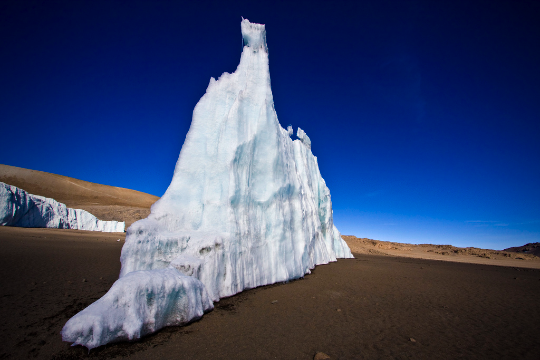
We're Melting - The Tale of Mount Kilimanjaro


Ernest Hemingway once praised its sheer epicness - The glacier atop Mount Kilimanjaro, Tanzania. Unfortunately, global warming has caused the mountain to lose 85% of its glacier since 1912. So if things go at the rate they have been, you better get to Tanzania within the next 15 years if you want to see the mountain in all of its white capped glory.


WHAT is going on?

The ice is melting faster and faster. As more ice disappears, dark rock underneath is exposed, and the hotter it gets on the mountain. This causes the glacier’s shrinking to increase exponentially.

And this isn’t just happening in Tanzania; glaciers in North and South America, New Guinea and Europe are disappearing as well.


Why does it MATTER?

Firstly, if you can’t appreciate one of the most grand, epic, and eye opening sights that this earth holds then that is cause for alarm in itself. However, there are other reasons why this is not a good thing and why you should care.

  • Global Warming is happening - and fast. The melting glacial ice is a large scale indicator of climate change, and its power. Global warming is liquifying glaciers that have been around for thousands of years in the blink of an eye.
  • Ecosystems are at risk
  • People’s livelihoods are at risk. When you degrade the resources that tourism relies on, you lose your product. Kilimanjaro is a huge tourist attraction and helps bring in $50 million to the African nation every year. 

What will CHANGE this?

The key to stopping this complex phenomenon is reducing greenhouse gases. YOU as an individual need to be doing your part collectively. There are tons of resources out there that can help you become a better global citizen.

.  .  .  .  .  .  .  .  .  .  .  .  .  .  .  .  .  .  .  .  .  .  .  .  .  .  .  .  .  .  .  .  .  .  .  .  .  .  .  .  .  .  .  .  .  .  .  .  .  .  .  .  .  .  .  .  .  .  .  .  .  .  .

Want to learn more?

Treehugger Article
Suzuki Foundation - Climate Change

Saturday, January 22, 2011

Great Pacific Garbage Patch - The Largest Landfill in the World

The Great Pacific Garbage Patch. Have you heard of it? Its is quite frankly one of the most alarming examples of marine pollution there is. And no surprises here, its caused by human activity.

Image via Kevin Krejci - Flickr
So WHAT is it?
The Great Pacific Garbage Patch (or Pacific Trash Vortex) is essentially a plastic graveyard in the ocean. Its full of junk like old footballs, kayaks, lego blocks, plastic bottles and pretty much anything else you can think of. 
The Garbage Patch covers anywhere from 700 000 square km to up to 15 000 000 square km. It is essentially the largest landfill in the world - the smallest estimates put it around the size of Texas and the largest estimates say it could be twice the size of the United States. This thing is HUGE! Why don’t we know how large it is? Because much of the plastic is not actually visible to the human eye if you are in an airplane, using satellite imagery, or are even on a boat deck. 

 Image via João Vianna / National Geographic
The plastic is mostly particles that have broken down to polymers, and much of it is under the surface of the water. In addition to plastic and polymers, you’ll find chemical sludge and other debris. This debris remains trapped in an area in the North Pacific because of ocean currents. 

Think that this problem is contained to the patch? Sadly, you’d be wrong. The UN estimates that there are 46 000 pieces of floating plastic in every square mile of ocean. 


Image via ingridtaylar - Flickr
Why does it MATTER?
If the thought of a floating plastic wasteland doesn’t phase you, then how about this: 
  • Loss of life.  Animals eat the plastic, then starve, become dehydrated and die because of the chemicals that fill their stomach.
  • Human consumption of toxins. Toxins are eaten by jellyfish, which are eaten by fish, which are eaten by humans. Yes, we are all interconnected. You trash an ecosystem thousands of kilometers away, you will still end up with the effects. Thats just how it works. 
Image via taylorandayumi - Flickr
WHY does it happen?
You know that 7/11 slurpee cup you just tossed because you couldn’t find a garbage? Well, it blew in the wind, then it made its way to a stream, which met up with a river, which traveled to the ocean. And now its one more piece of debris that is adding to the problem.

Image via Chris Jordan
Moral of the story  - We need to be thinking long term! Dispose of waste properly. Use reusable products. Consume less. Waste less. 


.  .  .  .  .  .  .  .  .  .  .  .  .  .  .  .  .  .  .  .  .  .  .  .  .  .  .  .  .  .  .  .  .  .  .  .  .  .  .  .  .  .  .  .  .  .  .  .  .  .  .  .  .  .  .  .  .  .  .  .  .  .  .

Want to learn more? 

Great Garbage Patch

More

Followers